
When we sit around the dinner table and watch our families interact, we might recognize shared gestures or the same laugh echoing across generations. Physical resemblances are obvious. But there's another inheritance, far less visible yet just as powerful, moving quietly through the veins of every family: emotional inheritance.
Often ignored or misunderstood, emotional inheritance shapes not only our behaviors but the very way we process the world. We think we are free to choose how we feel or react, but in reality, much of our emotional landscape is seeded long before our first breath.
Unspoken feelings shape family destinies.
What is not immediately visible
We tend to believe that we are defined mostly by our choices. We want to start with a clean slate, believing we can reason or willpower our way to emotional freedom. However, researchers and clinicians have increasingly shown that emotional patterns, much like eye color or posture, are transmitted from one generation to the next. This transfer is not always direct or simple.
There are several paths through which this happens:
- Biological, through genetics and neurobiology
- Psychological, through observed behavior and relationship dynamics
- Implicit, through nonverbal emotional climate and unspoken rules
We inherit anxieties no one talks about. Grief that flows beneath the surface. Even the way we express (or suppress) anger often originates with what we saw, felt, or sensed in our closest relationships.
We pass on what we do not resolve.
How emotion travels across generations
Every family has unspoken contracts about what is allowed to be felt or expressed. These are not usually stated—rather, they live in the pauses, in the glances, in what is avoided as much as in what is said.
The science is beginning to catch up with what many of us notice instinctively. A UCSF-based study reported on ScienceDaily demonstrated that the structure of the corticolimbic system (which handles emotional regulation) is more closely transmitted from mothers to daughters, affecting not only emotional experience but the risk for mood disorders. This neurological basis forms just one layer of the whole system of emotional inheritance.
At the psychological level, children unconsciously absorb emotional styles by watching parents cope with stress, joy, and conflict. Factors like tone of voice, emotional responsiveness, and even silence surrounding difficult subjects are etched into the child’s developing nervous system.
Another level of inheritance happens through direct experience. Studies such as the Norwegian Mother, Father and Child Cohort Study of over 26,000 children found that maternal neuroticism directly increased anxiety and depressive symptoms in children. This was not just genetics—the direct effect of the parent’s emotional state mattered deeply.
The invisible wounds: trauma and silence
One of the least acknowledged ways emotional inheritance acts is through unaddressed trauma. Research with families of war veterans shows that the echoes of trauma affect not just those exposed but also their descendants, lasting decades after the events. Longitudinal research on war-related trauma finds psychological symptoms present in children of veterans, even when the traumatic events happened 40 years earlier.
Even in families without overt trauma, silence can be a powerful transmitter. When family pain is hidden, children sense what cannot be spoken and may carry a vague, persistent sadness or anxiety. They inherit restrictions about which emotions are safe or allowed, often without any words exchanged.
We inherit not just what is shared, but also what is hidden.
When stress leaves its mark: epigenetics and emotion
Modern science is uncovering how stress can mark genes, not by changing DNA itself, but in how genes express themselves. Research on adolescent stress and transgenerational effects shows that stress can be transmitted through the male lineage, altering gene expression in the amygdala (the brain’s fear center) and influencing anxiety in the next generation.
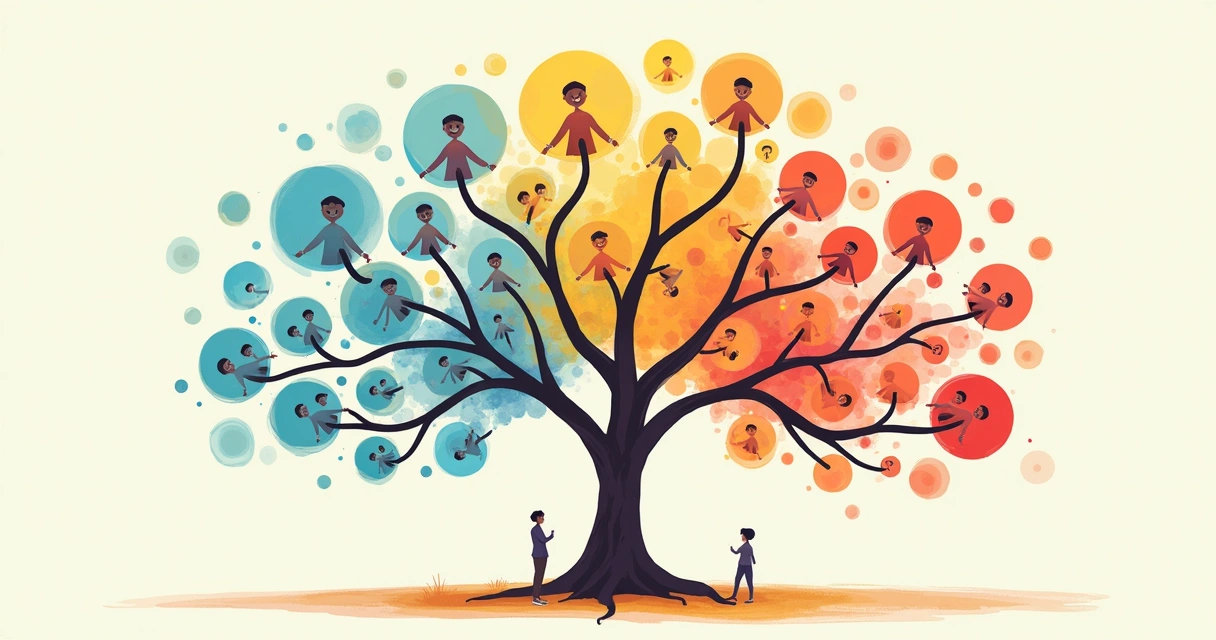
What we feel is not entirely our own. Our ancestors, knowingly or not, hand over a map of emotional responses that shape our daily lives, often in ways we only begin to decipher as adults.
Signs we carry more than we realize
Sometimes, we notice strong reactions in ourselves that don't match our personal experience. We become anxious, fearful, or withdrawn without clear reason. Or we repeat patterns in relationships that perplex us.
Several signs suggest emotional inheritance at play:
- Feeling emotions that don’t seem to fit the current situation
- Unexplainable fears or sadness
- Repeated conflicts or dynamics in relationships that echo family stories
- Strong aversion to topics or emotions treated as taboo in the family
It is common to live out family emotional scripts, even when we try to escape them.
How to begin transforming emotional inheritance
Healing begins with seeing. We need courage to look at what was lived, suffered, or silenced by previous generations. The process is not about blame but awareness.
- Observe family patterns, especially around conflict and affection
- Listen for what is avoided or over-emphasized in family stories
- Reflect on your repeated emotional reactions
- Consider professional support when patterns feel overwhelming
Changing emotional inheritance starts with acknowledging what we carry, not just what we wish we received.
Awareness transforms inheritance into choice.
Building conscious family legacies
Families do not just pass pain; they pass resilience, courage, and love. When we confront our emotional inheritance, we can become conscious transmitters of new patterns—dialogue, compassion, and inner balance.
What we resolve becomes a gift, reaching forward to those who come after. By moving from unconscious repetition to mindful presence, we begin to write new chapters in our family story. If we look honestly, we might discover that the most precious thing we leave behind is not material, but emotional clarity and maturity.
Conclusion
Emotional inheritance is a force that shapes our lives in ways we rarely see until we stop and reflect. We may not choose our starting point, but with awareness and courage, we can influence what is passed forward. Inside every family, the chance awaits to turn inherited pain into strength, and silence into understanding. The real legacy is not just what we receive, but what we transform for those yet to come.
Frequently asked questions
What is emotional inheritance in families?
Emotional inheritance in families refers to the transmission of emotional patterns, responses, and unresolved feelings across generations, through genetics, learned behavior, and the unspoken emotional climate within the family. It can include ways of handling stress, joy, anger, and even silence surrounding difficult topics.
How does emotional inheritance affect children?
Children often absorb family emotional patterns by observing their parents’ behavior, tone, and responses to life’s events. Studies, like the Norwegian Mother, Father and Child Cohort Study, show that children can develop similar anxiety, depression, or coping strategies based on the emotional state and styles of their parents.
Can emotional inheritance be changed or healed?
Yes, emotional inheritance can be addressed and transformed through self-awareness, open dialogue, and personal growth. While some patterns are deep-rooted, recognizing them is the first step to shifting these cycles and making new choices for ourselves and future generations.
How to break negative emotional cycles?
Breaking negative emotional cycles begins with observing and understanding the patterns at play. Seeking support, whether through reflective practices or professional guidance, can help address these patterns. New habits, open communication, and intentional actions create the possibility for change.
Why is emotional inheritance often overlooked?
Emotional inheritance is often overlooked because it is invisible, subtle, and rarely discussed openly within families. Many people believe their feelings are only their own, not recognizing how much is shaped by familial experience, silence, and learned response from previous generations.