


We have seen many people prepare for cross-cultural negotiation by studying market facts, contract terms, and business etiquette. That helps. But it is often not enough. The real pressure starts when a pause feels too long, a direct answer feels rude, or a polite smile hides disagreement. In those moments, self-regulation shapes the outcome.
Self-regulation is the ability to notice our inner reactions and guide our behavior on purpose.
In cross-cultural negotiation, this skill matters because meaning does not travel in a simple way. Tone, pace, silence, status, disagreement, and trust can be read very differently from one culture to another. If we react too fast, we stop listening. If we feel threatened, we narrow our view. If we push our own style as the only right one, the conversation hardens.
We think this is where many deals lose value. Not because the numbers were wrong, but because emotions were unmanaged.
Culture changes the meaning of behavior
A firm handshake may signal confidence in one setting and feel aggressive in another. A long silence may mean respect, thoughtfulness, or resistance, depending on the context. We cannot assume that our first interpretation is correct.
A 2019 study with 399 working professionals found that cultural values such as power distance, uncertainty avoidance, collectivism, and masculinity shape whether people negotiate more cooperatively or competitively. The same study also showed that cultural intelligence helps mediate this effect, which points to the role of self-control and behavioral adjustment in real interactions, as seen in research on cultural values, cultural intelligence, and negotiation style.
That makes practical sense to us. When we regulate our urge to judge too soon, we become more curious. Curiosity gives us better data. Better data gives us better moves.
Pause first. Interpret later.
Without self-regulation, cross-cultural differences can feel personal. A delayed response seems evasive. A blunt reply seems hostile. A formal approach seems cold. Once that emotional story takes hold, we begin negotiating against our own assumptions.
What self-regulation looks like at the table
Self-regulation is not emotional suppression. It is not becoming passive either. It is an active skill set that helps us stay steady while reading the room with care.
In our experience, it often shows up in simple behaviors like these:
Slowing down before replying to a surprising statement.
Asking a clarifying question instead of defending a position at once.
Noticing body tension and relaxing it before the next proposal.
Separating intent from impact when a comment feels offensive.
Adjusting tone and pace without losing clarity.
These actions may look small from the outside. They are not small inside. They stop escalation before it starts.
In negotiation, the person who can stay composed for ten extra seconds often sees options that others miss.

Emotions affect outcomes more than many admit
People like to think negotiation is mostly rational. We do not see it that way. Emotions shape timing, trust, concessions, and risk tolerance. They also affect whether the other side feels safe enough to share what they really need.
A 2026 meta-analysis of 105 empirical studies found that emotional intelligence is positively linked with negotiation outcomes overall, with a stronger effect on relational outcomes than on economic ones. That means emotional skills matter even more when trust, future cooperation, and mutual respect are on the line, as shown in this meta-analysis on emotional intelligence and negotiation outcomes.
We find that point very telling. Cross-cultural negotiation is rarely a one-time exchange. Even when the contract is short, the relationship around it can be long. If self-regulation protects the relationship, it protects value too.
There is another layer. Experimental evidence also shows that anger lowers joint gains in negotiation. Yet a brief if-then plan, such as deciding in advance how to respond when anger rises, can cancel much of that damage. Angry negotiators with such plans performed closer to non-angry negotiators and gave up less when facing anger from others, according to experimental studies on anger and if-then self-regulation plans.
That is a useful lesson because anger in cross-cultural settings is not always loud. Sometimes it is silent withdrawal. Sometimes it is a clipped answer. Sometimes it is polite distance. Self-regulation helps us catch the surge early.
Why this gets harder across cultures
Cross-cultural negotiation adds emotional strain because uncertainty rises. We may not know the hidden rules. We may misread status cues. We may wonder if trust is real or just formal politeness. The brain does not love ambiguity. Under stress, it tends to simplify. That is when we become rigid.
We have seen this happen in ordinary scenes. A team enters a meeting expecting fast decisions. The other side wants more time, more relationship building, and more consultation. Nobody says, "We are feeling unsafe." Yet both sides begin to act from that feeling.
When uncertainty rises, self-regulation keeps us from turning difference into threat.
Large-scale research with 1,197 participants from 20 cultural groups found that culture changes how negotiation behaviors connect with outcomes. Cooperative and problem-solving strategies led to higher profits only in some cultural settings, especially those with strong long-term orientation, according to a multi-country study on culture, negotiation behavior, and outcomes.
This tells us something simple but deep. Good strategy is not fixed. It must be adjusted. And adjustment is hard when we are emotionally flooded.
Practical ways to build the skill
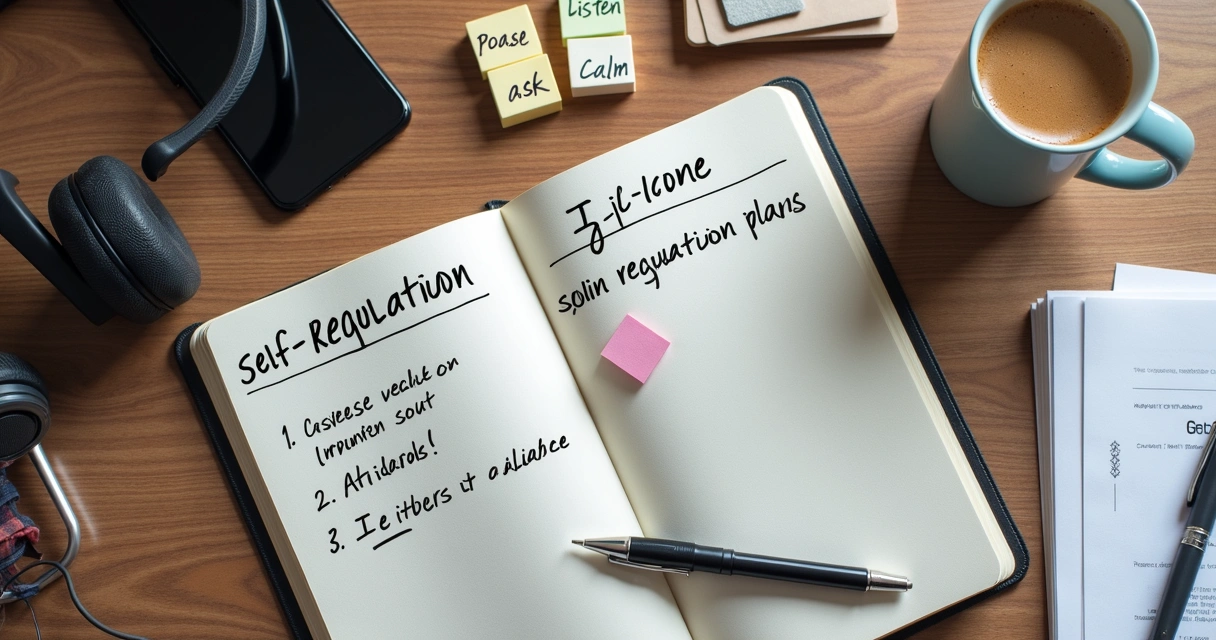
Self-regulation can be trained. We do not need to wait for a major conflict to start. Small habits built before the meeting often decide how we act during the meeting.
We suggest a sequence like this:
Name the trigger. Write down what usually throws you off, such as silence, interruption, indirect language, or status pressure.
Create an if-then plan. For example: "If I feel rushed, then I will ask one clarifying question before answering."
Rehearse a slower pace. Practice speaking after one full breath, especially when challenged.
Prepare three neutral questions. This keeps curiosity available when tension rises.
Review after the meeting. Note where emotion narrowed your thinking and where regulation helped.
We also think it helps to prepare for style differences, not only content differences. If we expect variation in directness, decision speed, hierarchy, and conflict style, we are less likely to feel shocked by them.
Conclusion
Cross-cultural negotiation is not only a test of knowledge. It is a test of inner steadiness. We may know the facts and still lose trust if we react from impatience, pride, fear, or anger. We may face a tough moment and still create progress if we stay present, curious, and measured.
We believe self-regulation matters because it protects judgment under pressure. It keeps difference from becoming conflict too soon. It helps us adapt without losing integrity. And it gives the other side something rare: a sense of safety in a tense moment.
That changes the conversation. Sometimes quietly. Sometimes all at once.
Frequently asked questions
What is self-regulation in negotiation?
Self-regulation in negotiation is the skill of managing our emotions, impulses, and behavior during the exchange. It helps us stay calm, think clearly, and respond with intention instead of reacting on instinct.
Why is self-regulation important cross-culturally?
It matters across cultures because the same behavior can carry different meanings in different settings. Self-regulation helps us slow down, avoid quick judgments, and adapt our communication when norms around silence, status, disagreement, or trust are not the same as our own.
How to improve self-regulation skills?
We can improve self-regulation by noticing our triggers, preparing if-then responses, practicing slower replies, using breathing to settle tension, and reviewing our behavior after each negotiation. Repetition builds steadiness over time.
What are common self-regulation challenges?
Common challenges include anger, defensiveness, fear of losing face, impatience with silence, stress under ambiguity, and the habit of assuming bad intent. These reactions can narrow attention and lead to poor decisions if we do not catch them early.
Can self-regulation impact negotiation outcomes?
Yes. Self-regulation can improve both the process and the result. It supports better listening, smarter concessions, stronger trust, and more flexible strategy. In cross-cultural negotiation, those gains can shape both agreement quality and the future relationship.